
Translation / Dialogue Tutorial

Counterfactual fairness analysis in language-vision models.

Multimodal vision-language models are increasingly deployed in high-stakes settings, which makes understanding the biases they encode both a technical and ethical priority. This tutorial addresses that challenge directly, using counterfactual fairness as its core evaluative framework. The concept of counterfactual fairness is familiar in machine learning: it captures the intuitive idea that if decisions should not be made on the basis of protected characteristics (race, gender, disability, age, and others) then changing those attributes in the input to a model should not change the output. This tutorial focuses on the question of how we can develop and use counterfactual image datasets to assess bias in large vision-language models (LVLMs). Our discussion will begin with the process of image dataset creation and the trade-offs of collecting versus generating images. We will summarize which protected characteristics have been studied (and overlooked) in the literature, and provide examples of numerical, closed-class, and open-ended generation tasks and corresponding bias metrics. Furthermore, we will address some of the more contested questions around counterfactual fairness, such as whether mapping social constructs like race and gender onto discrete counterfactual classes risks reinforcing the very categories we seek to interrogate, and whether the use of synthetic images introduces new sources of bias to the analysis. The session will culminate in a hands-on session so that attendees can test and critique the methodology for themselves. This tutorial is aimed at researchers and practitioners in all disciplines — no prior background knowledge is required.

Register now
Format 60 minutes session
Date 5 p.m. 25 June 2026
Location Joyce room, Montreal Sheraton Centre
01

Hands-on activity

Open hands-on activity

A guided exercise participants will work through during the session (no longer active, please contact organizers for more information).

02

Slides

Download tutorial slides

Slides presented at the session.

03

Resources

Paper · NeurIPS 2017

Counterfactual Fairness

Kusner, Loftus, Russell, Silva. Introduces the counterfactual fairness framework using tools from causal inference.

→ Read paper
Paper · NAACL 2025

Uncovering Bias in Large Vision-Language Models at Scale with Counterfactuals

Howard, Fraser, Bhiwandiwalla, Kiritchenko. Large-scale counterfactual study of bias in LVLM-generated text.

→ Read paper
Paper · EACL 2024

Examining Gender and Racial Bias in Large Vision–Language Models Using a Novel Dataset of Parallel Images

Fraser, Kiritchenko. Introduces the PAIRS dataset of parallel AI-generated images to probe LVLM bias.

→ Read paper
Paper · EMNLP 2025

VISBIAS: Measuring Explicit and Implicit Social Biases in Vision Language Models

Huang, Qin, Zhang, Yuan, Wang, Zhao. Evaluates explicit and implicit biases in VLMs across direct questioning and indirect tasks.

→ Read paper
Paper · arXiv

Cultural Counterfactuals: Evaluating Cultural Biases in Large Vision-Language Models with Counterfactual Examples

Extends counterfactual evaluation to cultural dimensions of bias in LVLMs.

→ Read paper
Paper · ICCV 2021

Understanding and Evaluating Racial Biases in Image Captioning

Zhao, Wang, Russakovsky. Analyzes racial bias in image captioning systems trained on COCO.

→ Read paper
Paper · NAACL 2018

Gender Bias in Coreference Resolution: Evaluation and Debiasing Methods

Zhao, Wang, Yatskar, Ordonez, Chang. Introduces WinoBias and a data-augmentation debiasing approach.

→ Read paper
Paper · *SEM 2018

Examining Gender and Race Bias in Two Hundred Sentiment Analysis Systems

Kiritchenko, Mohammad. Introduces the Equity Evaluation Corpus (EEC) for auditing sentiment systems.

→ Read paper
Paper · FAccT 2023

Bias Against 93 Stigmatized Groups in Masked Language Models and Downstream Sentiment Classification Tasks

Evaluates LLMs and language-vision models for bias against a broad set of stigmatized groups.

→ Read paper
Paper · ACL 2023

Marked Personas: Using Natural Language Prompts to Measure Stereotypes in Language Models

Cheng, Durmus, Jurafsky. Prompt-based method grounded in markedness to measure intersectional stereotypes in LLMs.

→ Read paper
Paper · Survey

Vision-Language Pre-training: Basics, Recent Advances, and Future Trends

Gan, Li, Li, Wang, Liu, Gao. Comprehensive survey of vision-language pre-training methods.

→ Read paper
Paper · Law Review

Eddie Murphy and the Dangers of Counterfactual Causal Thinking About Detecting Racial Discrimination

Kohler-Hausmann. Critiques the counterfactual causal model of discrimination from a legal and constructivist perspective.

→ Read paper
Paper · CSCW 2020

How We've Taught Algorithms to See Identity: Constructing Race and Gender in Image Databases for Facial Analysis

Scheuerman, Wade, Lustig, Brubaker. Examines how race and gender are operationalized in facial-analysis training data.

→ Read paper
Paper · FAccT 2023

Easily Accessible Text-to-Image Generation Amplifies Demographic Stereotypes at Large Scale

Bianchi, Kalluri, Durmus, Ladhak, et al. Documents how text-to-image models amplify stereotypes about gender, race, and nationality.

→ Read paper
Paper · FAccT 2021

The Use and Misuse of Counterfactuals in Ethical Machine Learning

Kasirzadeh, Smart. Argues for caution when applying counterfactuals to social categories like race or gender.

→ Read paper
Paper · FAccT* 2020

Towards a Critical Race Methodology in Algorithmic Fairness

Hanna, Denton, Smart, Smith-Loud. Examines race as a social construct in algorithmic fairness, drawing on critical race theory.

→ Read paper
04

Organizers

Kathleen Fraser

Kathleen C. Fraser

University of Ottawa

Kathleen is an associate professor of computer science at the University of Ottawa. Her research focuses on responsible use of NLP and AI technologies, including evaluation of bias and safety in large language models. Kathleen has numerous publications on bias in vision-language systems.
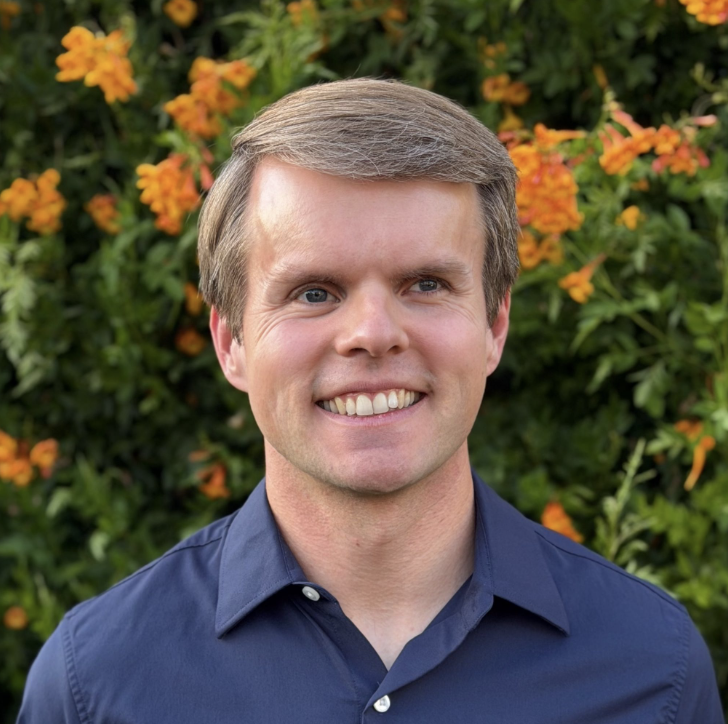
Phillip Howard

Phillip Howard

Thoughtworks

Phillip is an AI researcher who leads Thoughtworks AI Labs, an industry research team focused on interpretability, robustness, and evaluation of generative AI models. Phillip has published multiple papers on the generation of synthetic counterfactual examples for improving model generalization as well as evaluating and mitigating social biases

Jieyu Zhao

Jieyu Zhao

University of Southern California

Jieyu is an assistant professor in the Department of Computer Science at the University of Southern California. Her research focuses on fairness in machine learning and NLP. Her work has garnered attention from major media outlets, including Wired and The Daily Mail. She has delivered talks to a range of international audiences at various venues, including AAAI,2 NAACL, and IJCAI.

Margaret McKay

Margaret McKay

National Research Council Canada

Margaret is a Program Leader at the National Research Council of Canada. Her research focuses on AI safety, primarily from the perspectives of enabling governance, assessment and real-world accountability. Margaret has spoken at academic conferences, educational sessions for the public, and expert presentation at the OECD. She holds a Juris Doctor from the University of Toronto, and a Master of Laws in Cybersecurity & Privacy.

Morgan Scheuerman

Morgan Klaus Scheuerman

Sony AI

Morgan is a research scientist in AI Ethics at Sony AI, with a broad focus on responsible AI, data curation, identity theory, infrastructure studies, and digital identity. Morgan has published extensively on the real-world implications of machine learning for those with historically marginalized identities, and has won numerous best paper, honorable mention, and diversity & inclusion awards.

05

Citation

If you find this tutorial useful, please cite it as:

@inproceedings{fraser2026counterfactual,
  author    = {Fraser, Kathleen and Howard, Phillip and Zhao, Jieyu and McKay, Margaret and Scheuerman, Morgan},
  title     = {Translation/Dialogue Tutorial: Counterfactual Fairness Analysis in Language-Vision Models},
  booktitle = {Presented at the 2026 ACM Conference on Fairness, Accountability, and Transparency (FAccT)},
  year      = {2026},
  month     = {June},
  address   = {Montreal, Canada},
  publisher = {Association for Computing Machinery},
}